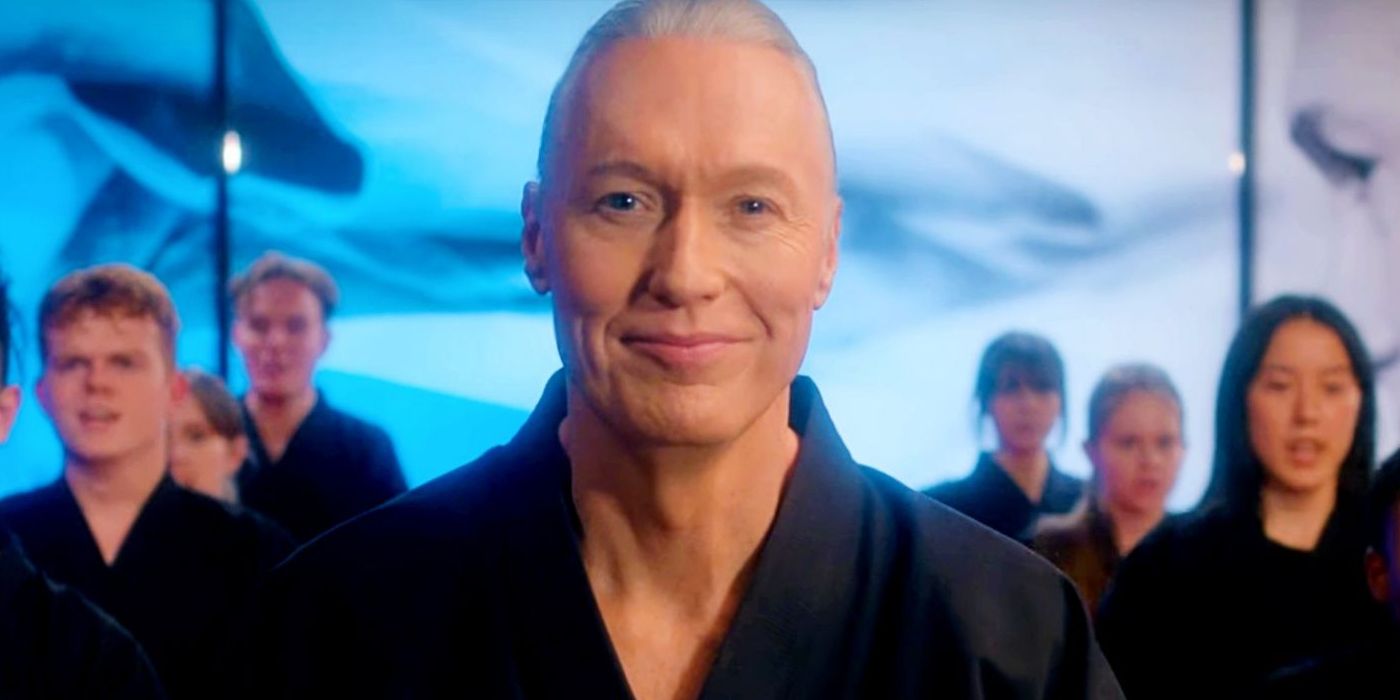
He’s tall. He’s rich. He’s absolutely out of his mind. If you’ve spent any time watching Terry Silver in Cobra Kai, you know that the man doesn't just walk into a room; he haunts it. When we first met him back in The Karate Kid Part III, he was basically a live-action cartoon character, a ponytail-wearing billionaire who spent his days screaming at teenagers and dumping toxic waste. It was over the top. It was campy. Honestly, it was a bit much for 1989.
But then Netflix brought him back.
Thomas Ian Griffith returned to the role in Season 4, and suddenly, the "coke-fueled" energy of the eighties was replaced by something far more terrifying: refinement. This isn't just nostalgia bait. Silver represents the most complex psychological threat the Valley has ever seen, far outclassing John Kreese’s blunt-force trauma approach to karate.
The Psychological Warfare of Terry Silver in Cobra Kai
Silver’s return changed the DNA of the show. Before he showed up, the conflict was mostly about old guys arguing over trophies and high schoolers kicking each other in malls. Silver brought money. He brought global ambition. Most importantly, he brought a level of gaslighting that would make a corporate lawyer blush.
You see, Silver didn't start off as a villain in the revival. He was living in a literal glass house, playing piano, and eating vegan appetizers. He had moved on. He told Kreese to kick rocks. But the genius of the writing—and Griffith’s performance—is how we watch that veneer of civilization slowly peel away. It’s like watching a recovering addict relapse, but his drug isn't a substance; it's the feeling of total dominance.
He understands a fundamental truth about human nature that Daniel LaRusso and Johnny Lawrence constantly miss. People don't just want to fight; they want to belong to something that feels powerful. Silver doesn't just teach karate. He sells a lifestyle of "no mercy" that feels like success.
Why the "Silver Bullet" is More Than a Punch
In Season 5, we see the introduction of the "Silver Bullet." It’s a specialized strike to the solar plexus designed to knock the wind out of an opponent, leaving them paralyzed and gasping. It’s brutal.
But it’s also a metaphor.
That is exactly how Terry Silver operates in the business world and the dojo. He finds the soft spot. For Daniel, it’s his trauma. For Kreese, it’s his past. For the kids in the Valley, it’s their desire for a father figure who actually has his life together. Silver buys the best equipment, hires international senseis like Da-Eun Kim, and builds a literal empire while his enemies are still fighting over who gets to use the local park for practice.
He’s a high-functioning sociopath with a black belt. That's a terrifying combination.
The Fallacy of the "New" Terry Silver
A lot of fans argue about whether Silver was actually "good" at the start of Season 4. Was he genuinely reformed? Maybe.
He seemed happy. He had a partner. He was wealthy beyond measure. But there’s a specific scene where he looks at his old ponytail in the mirror, and you can see the ghost of 1985 staring back. It suggests that the "enlightened" Silver was just a mask. It was a 30-year meditation session that failed the second a piece of his past walked through the door.
This leads to the big betrayal. Framing Kreese for the assault on Stingray was a masterstroke of villainy. It wasn't just about getting Kreese out of the way; it was about taking the "Cobra Kai" brand and scrubbing it clean of the old, dusty veteran vibes. Silver wanted a global franchise. He wanted the Sekai Taikai.
The Real-World Karate Roots
Believe it or not, Thomas Ian Griffith is actually a legitimate martial artist. He’s a black belt in Kenpo Karate and Tae Kwon Do. This matters. When you watch him move on screen, it’s not just stunt doubles and clever editing. He has a reach that makes him look like a predatory bird.
In The Karate Kid Part III, his movements were frantic. In Cobra Kai, they are surgical. This evolution mirrors how the character has aged. He no longer needs to jump around and scream to be the most dangerous person in the room. He just needs to stand still.
- Reach: His height gives him a natural advantage in point sparring.
- Wealth: He uses "soft power" (bribing referees) alongside "hard power" (the actual fighting).
- Legacy: He is obsessed with the idea that he is "saving" these kids by making them tough.
What Most People Get Wrong About the Finale
The end of Season 5 saw Silver’s downfall, but was it a total defeat? Some viewers think Daniel winning the final fight meant the end of the threat. I disagree.
Silver’s "Cobra Kai" philosophy has already infected the Valley. He showed that with enough money and a slick enough marketing campaign, you can make "strike first" look like a legitimate educational philosophy. Even with Silver in handcuffs, the damage to the community is done. The kids he trained—like Kenny—are fundamentally changed.
The tragedy of Terry Silver isn't that he lost his dojo. It's that he proved his point: everyone has a price, and everyone can be broken if you hit the right pressure point.
Actionable Insights for Fans and Students of the Show
If you're looking to understand the narrative arc of the show or even apply some of the "chess, not checkers" logic Silver uses (legally, please), here is how to view the Silver era:
- Analyze the "Why": Silver isn't motivated by a trophy. He’s motivated by a legacy. When dealing with any antagonist in fiction or life, look at what they are trying to build, not just what they are trying to destroy.
- Study the Framing: Notice how the cinematography changes when Silver is on screen. The lighting gets colder. The angles are sharper. It’s a masterclass in visual storytelling.
- Recognize the Gaslighting: Silver’s primary weapon is making his enemies look like the "crazy" ones. Daniel LaRusso almost lost his family because he became so obsessed with Silver that he started acting like a madman.
- The Importance of the Past: You can't understand Silver without watching The Karate Kid Part III. It’s a campy movie, but it provides the "origin of the wound" that explains why he is so desperate for Kreese's approval and later, so desperate to destroy him.
Silver represents the ultimate evolution of the franchise's themes. He is the shadow side of the American Dream—success at any cost, power without soul, and a ponytail that just won't quit. Whether he returns in the final season for one last "Aha!" or rots in a cell, his impact on the Karate Kid universe is permanent. He didn't just join the story; he took it over.
Go back and watch the scene where he burns down Mike Barnes' furniture store. It’s not about the wood. It’s about reminding everyone that he can touch them anywhere, at any time. That’s the Terry Silver way.
To truly understand the future of the series, keep a close eye on the students Silver left behind. Their disillusionment is the real fallout of his reign. You don't just walk away from a mentor like that without some serious psychological scars. The Sekai Taikai will likely show us the global version of the monster Silver tried to create, proving that while the man can be arrested, the "way of the fist" is a lot harder to lock up.
Check the tournament brackets and re-watch the Season 5 finale to see the exact moment the students realize they were being used as pawns in a billionaire's mid-life crisis.