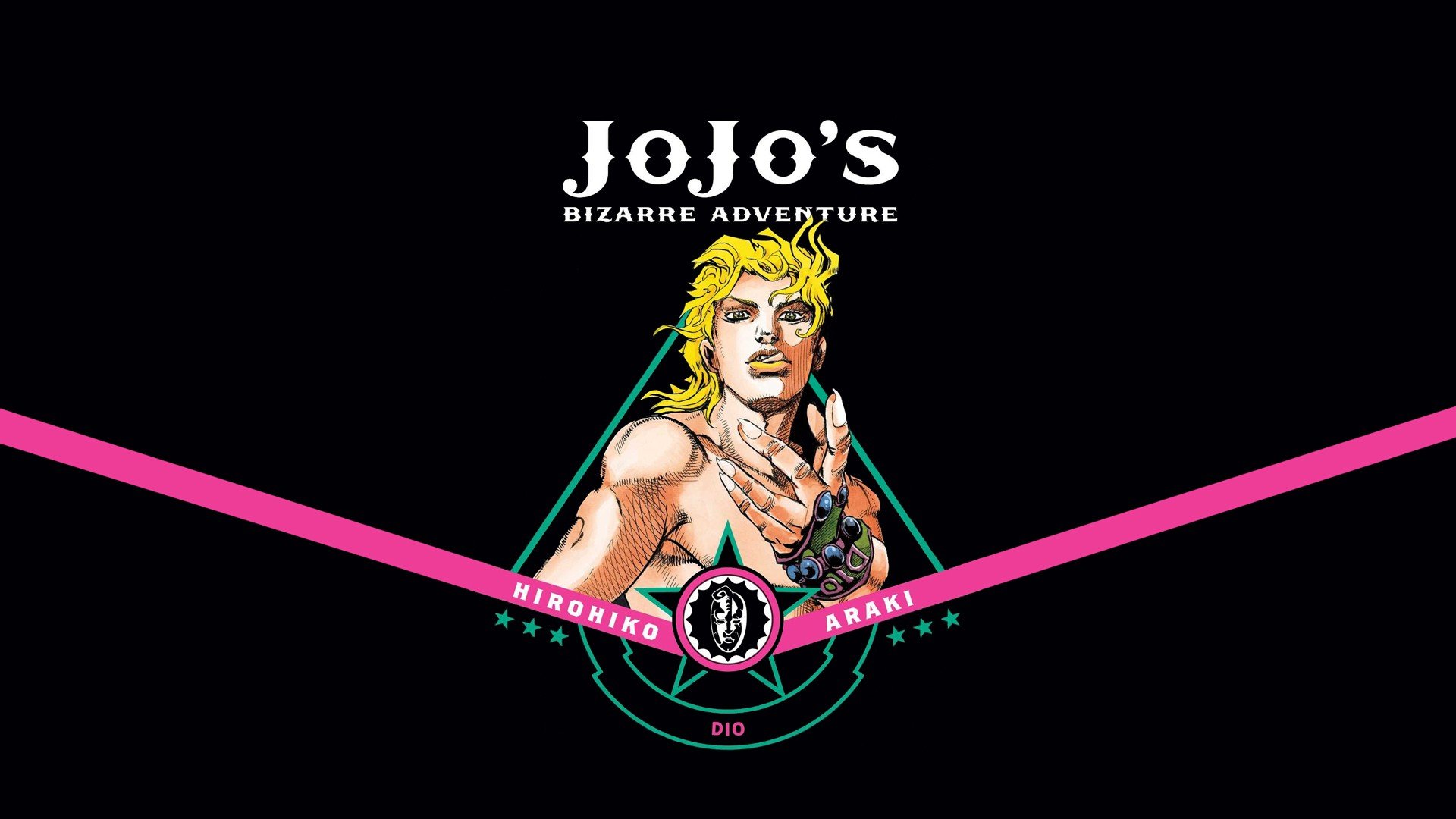
He’s a nightmare. Honestly, there isn't a better way to describe the blonde, blood-sucking, power-hungry maniac that Hirohiko Araki unleashed upon the manga world back in 1987. When we talk about JoJo's Bizarre Adventure Dio—or DIO, as he prefers the all-caps ego trip later on—we aren't just talking about a bad guy. We are talking about the gravitational center of a franchise that has spanned decades, continents, and literal universes.
Dio isn't a "misunderstood" antagonist. He doesn't have a secret heart of gold. He’s a monster. But he’s a charismatic monster, and that makes all the difference.
Most villains want to rule the world because of some twisted sense of justice or a tragic backstory that supposedly justifies their body count. Not Dio. While his childhood in the Victorian slums of London was undeniably horrific, thanks to a dynamic where his father Dario Brando essentially drank the family into a grave, Dio’s response wasn't to fix the world. It was to dominate it. He didn't want to be equal to the Joestars; he wanted to stand on top of their corpses. This raw, unfiltered ambition is exactly why the character has survived so many iterations of the series.
The Victorian Roots of a Monster
The rivalry starts with a carriage crash. It’s a classic literary trope, but Araki twists it. George Joestar thinks Dario Brando is saving his life, when in reality, the man is just trying to loot the bodies. This single misunderstanding invites the devil into the Joestar household.
When Dio arrives at the Joestar estate, he isn't some shy orphan. He kicks Jonathan’s dog. He steals a kiss from Jonathan’s love interest, Erina, just to prove he can. It’s petty. It’s mean. It’s incredibly effective at making you hate him instantly.
But then, things escalate.
The Stone Mask changes everything. This isn't just a horror element; it's the catalyst for the entire supernatural shift of the series. By rejecting his humanity—literally shouting "I reject my humanity, JoJo!"—Dio moves from being a Dickensian villain to a supernatural force of nature. He becomes a vampire, but not the sparkly kind or the mopey kind. He becomes a predator who views humans as nothing more than "bread" to be consumed.
That Century Beneath the Waves
Jonathan Joestar dies. It’s one of the biggest shocks in early shonen history. The protagonist actually loses his life to stop the villain. Except, as we find out in Stardust Crusaders, it didn't really work.
Dio spent a hundred years at the bottom of the Atlantic Ocean. Think about that for a second. The sheer willpower required to survive in a coffin, attached to the decapitated body of your worst enemy, is staggering. When he's hauled up by fishermen in the 1980s, he isn't the same impulsive brawler from Phantom Blood. He’s evolved.
This is where JoJo's Bizarre Adventure Dio becomes the legendary "DIO." He’s more calculated. He’s draped in shadows. He’s become a god-figure to a cult of Stand users. He doesn't even need to fight his own battles for most of the Part 3 arc because his charisma is so infectious that people are willing to die just for a glimpse of him.
The World and the Philosophy of Power
When we finally see his Stand, The World (Za Warudo), it feels like a cheat code. Stopping time is the ultimate expression of Dio’s desire for control. If time is stopped, no one can move against you. You are the only one with agency.
It’s interesting to look at the work of researchers like Jason Bainbridge, who has written about the legal and cultural structures within JoJo. Dio represents the ultimate disruption of the "gentlemanly" order Jonathan tried to uphold. He is the breakdown of law.
But why do people follow him? It’s not just the flesh buds he implants in their brains. It’s the "Peace of Mind" speech. DIO argues that most people live in a constant state of anxiety about the future and death. By serving him, they surrender that anxiety to a higher power. It’s a cult leader's logic, and it’s terrifyingly effective.
The Shadow He Casts Over Part 6
You can't talk about Dio without talking about Enrico Pucci. In Stone Ocean, we see a side of Dio that isn't just about "Wryyyy" and steamrollers. We see the philosopher.
His conversations with Pucci about "Heaven" and "Gravity" show a man who is obsessed with fate. He wants to create a world where everyone knows their destiny, believing that this foreknowledge would bring true happiness. It’s a bizarrely "altruistic" goal for a guy who spent the 1880s turning mothers into zombies to eat their own babies.
This nuance is what makes him the GOAT of anime villains. He contains multitudes. He can be a campy, over-the-top vampire one minute and a quiet, brooding intellectual the next.
Why the Internet Loves (and Memes) Him
Let's be real. The memes are half the reason Dio is still relevant. "It was me, Dio!" has become a universal shorthand for a plot twist or a betrayal. The "Road Roller" scene is one of the most iconic moments in animation history.
But memes only happen when a character has a distinct "flavor." Dio’s flavor is arrogance mixed with high fashion. He wears heart-shaped kneepads and yellow jackets. He poses. He treats every moment like he's on a runway in Milan.
In a world of gritty, "relatable" villains, Dio is a breath of fresh, albeit blood-scented, air. He’s fun. You love to see him lose, but you can't wait for him to show up again.
The Biological Horror of the Joestar Connection
There is something deeply unsettling about the fact that DIO uses Jonathan’s body. Throughout Stardust Crusaders, the birthmark on his shoulder—the Joestar star—is a constant reminder of his theft.
This creates a psychic link. It’s why Jotaro and Joseph can sense him. It’s why the Stands manifested in the first place. Dio is the virus that forced the Joestar bloodline to evolve or die.
Without Dio, there is no Jotaro Kujo. There is no Josuke Higashikata. There is no Giorno Giovanna (who is literally Dio’s son, adding a whole other layer of "what the heck" to the family tree). Dio is the engine that drives the entire plot of the first six parts of the series.
Common Misconceptions About His Powers
A lot of casual fans think Dio is just a vampire who can stop time. That’s a massive oversimplification.
- Vampiric Abilities vs. Stand Powers: In Part 3, DIO rarely uses his vampire powers (like the ice-vaporization or the eye-lasers) because he's overconfident in The World. Also, Jonathan’s body is actively rejecting him, which weakens his regenerative abilities.
- The Duration of Time Stop: It wasn't fixed. DIO was training to increase it. It started at a few seconds and reached nine by the end of the fight with Jotaro. He believed that with enough blood—specifically Joestar blood—he could stop time indefinitely.
- The "World" Theory: There’s an old fan theory that The World’s true power was actually to use every Joestar Stand power. This is based on him using a Hermit Purple-like ability early in Part 3. However, Araki later clarified this was technically "Jonathan’s Stand" coming from the stolen body, not a property of The World itself.
The Cultural Impact: From Japan to the World
Dio Brando isn't just a JoJo character anymore; he’s a cultural touchstone. You see his influence in characters like Sakuya Izayoi from Touhou or even in the design of certain fighting game bosses. He represents the "High Stakes" villain.
His voice actor, Takehito Koyasu, deserves a ton of credit here too. The way he delivers the lines—the "Muda Muda Muda," the "WRYYYYY"—has defined the character for the modern era. It’s a performance that captures the sheer joy of being evil.
What You Can Learn From Dio’s Arc
If we strip away the supernatural elements, Dio is a study in the destructive nature of pure ego. He had the intellect and the drive to do anything. He could have been the greatest doctor, lawyer, or politician of his age. Instead, he chose to burn everything down because he couldn't stand being second to anyone.
It’s a cautionary tale wrapped in a yellow jacket and vampire fangs.
Actionable Takeaways for Fans and Creators
If you're looking to dive deeper into the lore or even use Dio as inspiration for your own creative work, consider these steps:
- Read the Manga Over the Anime: The anime is great, but Araki’s art in the Phantom Blood and Stardust Crusaders manga captures a specific gothic horror vibe that the vibrant colors of the show sometimes mask.
- Check out "Over Heaven": This is a light novel (not strictly canon, but supervised by Araki) written by Nisio Isin. It’s presented as Dio’s diary and offers a fascinating, albeit non-canonical, look into his psyche.
- Analyze the "Stand" Evolution: Look at how Dio’s presence changes the power system of the series. He is the bridge between the physical martial arts of Hamon and the psychological manifestations of Stands.
- Study the Fashion: Araki’s use of Versace and Moschino references in character designs—especially Dio’s—is a masterclass in visual storytelling. A character’s outfit should tell you their personality before they even speak.
Dio Brando is the ultimate proof that a villain doesn't need to be sympathetic to be iconic. He just needs to be unforgettable. Whether he’s hiding in a dark mansion in Cairo or trying to poison a wealthy Englishman in 1880, he demands your attention. And usually, he gets it.