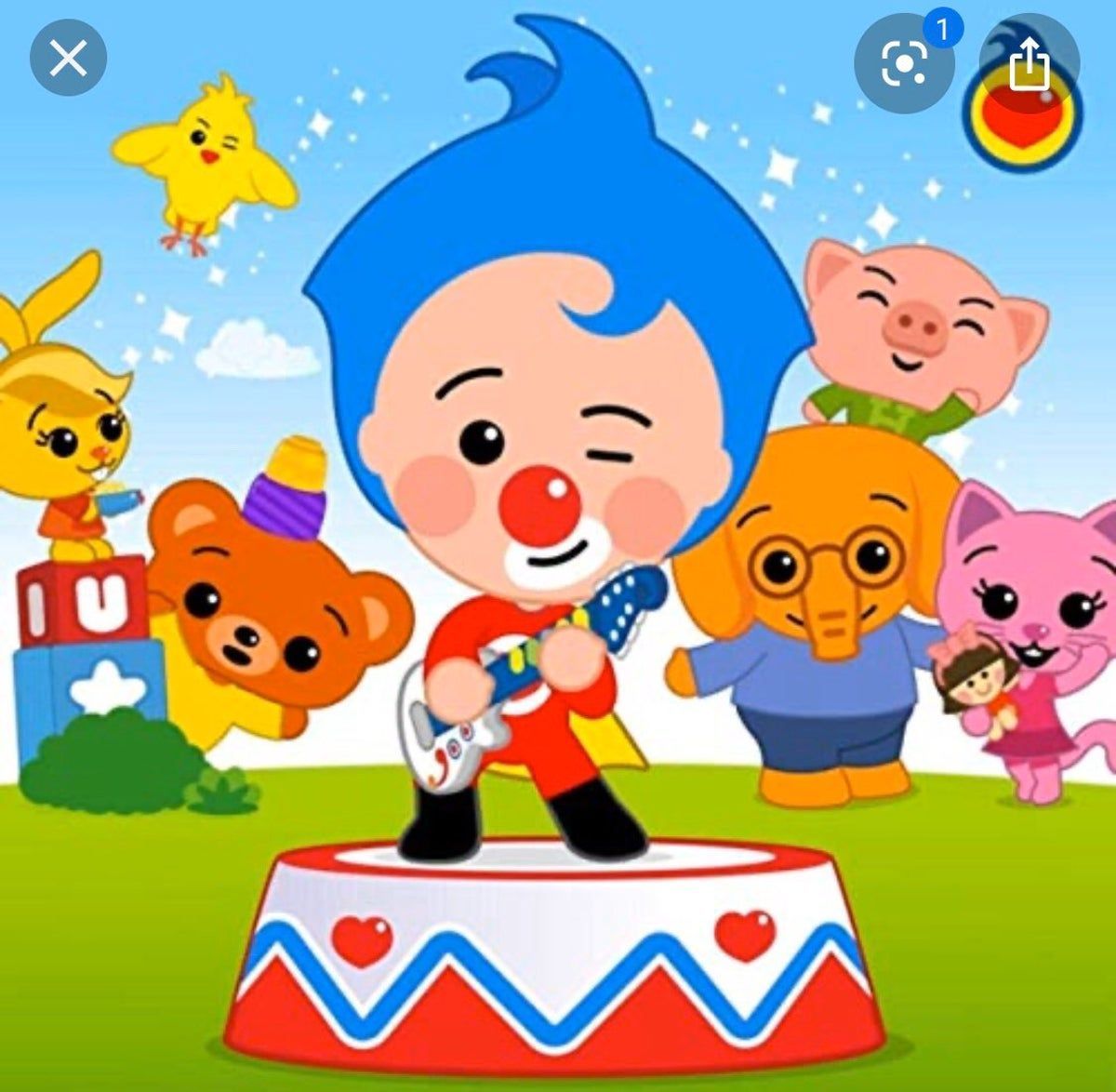
You've probably heard that infectious, high-pitched whistling. If you have a toddler, El Payaso Plim Plim isn't just a cartoon; he's basically a permanent roommate. Honestly, it's easy to dismiss a red-nosed clown in a blue cape as just another bright thing to keep a two-year-old quiet while you try to drink a lukewarm coffee. But there’s a massive, multi-million dollar reason why this character, created by Guillermo Pino and the team at Smilehood, has become a global powerhouse.
He’s everywhere.
The show isn't just "entertainment." It’s a calculated blend of psychology, catchy rhythms, and a very specific educational philosophy called "The Hero of the Heart." This isn't just about colors and shapes. It’s about emotional intelligence, which is a big word for "learning how not to have a meltdown in the grocery store."
Plim Plim first popped up on Disney Junior Latin America back in 2011, and since then, the YouTube numbers have gone absolutely nuclear. We are talking billions of views. Not millions. Billions.
The Secret Sauce of El Payaso Plim Plim
What makes Plim Plim different from, say, Cocomelon or Blippi? It’s the vibe. The show centers on a group of animal friends—Nacho the elephant, Bam the hippo, Acuarella the rabbit, Mei-Li the cat, and Hoggie the pig—who all live in a colorful world but face very real "kid problems." Like not wanting to share a toy or feeling scared of the dark.
Plim Plim is the "hero" who shows up to resolve these conflicts. But he doesn't do it with magic powers. He does it with songs and simple lessons.
The music is the hook. It’s based on the "Plim Plim song," which is actually a variation of the classic "Happy Birthday" melody in some regions or "Estrellita Dónde Estás" (Twinkle Twinkle Little Star). Using familiar nursery rhyme structures is a genius move because it triggers immediate familiarity in a child's brain. It’s like audio comfort food.
It’s Not Just for Spanish Speakers Anymore
While he started in Argentina, El Payaso Plim Plim has successfully jumped the language barrier. You can find him in English, Portuguese, Russian, and even Italian. This is a business masterclass in localization. The creators didn't just dub the voices; they adapted the "feel."
Interestingly, the show’s success relies on "silent storytelling" elements. Think about it. A lot of the physical comedy and the expressions are universal. A kid in Buenos Aires and a kid in Brooklyn both understand what a sad hippo looks like. That’s why it travels so well.
Why Parents Actually Like Him (Kinda)
Let's be real—most kids' shows are annoying. They’re loud, frantic, and have the pacing of a caffeine-fueled nightmare. Plim Plim is surprisingly chill. The colors are bright but not neon-electric. The movements are fluid.
The "Hero of the Heart" concept focuses on six pillars:
- Respect
- Honesty
- Solidarity
- Responsibility
- Fairness
- Friendship
It sounds cheesy, but when you’re trying to explain to a three-year-old why they can't hit their brother with a plastic dinosaur, having a song that explains "sharing is caring" in a non-judgmental way is actually pretty helpful. Guillermo Pino has often stated in interviews that the goal was to create a bridge between the school and the home.
The Business of the Clown
From a business perspective, the growth of Smilehood (the studio behind the clown) is fascinating. They didn't just stop at a TV show. They created an entire ecosystem. There are live shows that tour across Latin America and parts of the US. There's a massive line of toys, school supplies, and even themed birthday party kits.
Social media is where they really dominate. On TikTok and YouTube, the "shorts" format has allowed Plim Plim to stay relevant even as kids' attention spans get shorter. They release content constantly.
A Quick Reality Check on Screen Time
Is it all sunshine and rainbows? Well, it's still screen time. Experts like those at the American Academy of Pediatrics generally suggest limiting digital media for kids under two. However, if they are going to watch something, "co-viewing" is the gold standard.
Watching Plim Plim with your child and talking about what Hoggie the pig did wrong is way better than just handing over the iPad and walking away. The show is designed for this. It gives parents the vocabulary to talk about feelings.
Common Misconceptions About the Show
People often think Plim Plim is just a "modern" version of older clowns like Cepillín or Gaby, Fofó, and Miliki. That’s not quite right. Those older icons were variety show performers. Plim Plim is a conceptual character. He’s more like a "moral compass" than a circus act.
Another weird myth? That the show is "addictive" in a bad way. While any high-engagement content can be hard for a kid to turn off, the pacing of El Payaso Plim Plim is actually slower than many of its competitors. It’s not trying to overstimulate; it’s trying to educate.
The "Hero of the Heart" Philosophy in Practice
How does this actually look in an episode? Usually, a character gets into a pickle. Maybe Mei-Li is being too bossy. Plim Plim arrives, takes them to a "magical world" (a metaphor for a change in perspective), and they play a game that mirrors the problem. By the end, the character realizes how their actions affected others.
It’s basic social-emotional learning (SEL). And it works because it doesn't feel like a lecture. It feels like a song.
What You Can Actually Do with This
If you're a parent or an educator looking to use Plim Plim as more than just a distraction, there are a few ways to leverage the "Plim Plim effect" without losing your mind.
- Use the "Magic Words": The show emphasizes "Please," "Thank You," and "I'm Sorry." When your kid hears it from a hero, it carries more weight than when it comes from you for the hundredth time.
- The "Transition" Song: If your child struggles with moving from playtime to naptime, use the show’s melodies as a cue.
- Follow the Official Channels: The official "El Reino Infantil" or the dedicated Plim Plim channels often have curated playlists for specific moods—like "Sleepy Time" or "Dance Party." Use these to regulate the energy in the room.
Real Talk: The Catchy Songs
You will get "La Canción de las Figuras Geométricas" stuck in your head. You will hum it in the shower. You will find yourself singing about circles and squares while you're at work. Just accept it. It’s part of the deal.
The legacy of this character isn't just in the billions of views. It's in the way he's modernized the "educational clown" trope for a generation that doesn't go to the circus but knows exactly how to skip a YouTube ad.
Actionable Steps for Parents
Instead of just letting the auto-play run indefinitely, try these specific tactics to make the most of the show's educational potential:
- Identify the Emotion: When a character like Hoggie is frustrated, pause the video. Ask your child, "Why do you think Hoggie's face looks like that?" This builds empathy.
- Mirror the Movements: Plim Plim does a lot of simple choreography. Use it as a mini-workout for your toddler to develop gross motor skills.
- Check the Lyrics: If you're using the show to help your child learn a second language (especially Spanish), look up the lyrics to "El Alfabeto." The phonetic clarity in the songs is top-tier for language learners.
The brilliance of El Payaso Plim Plim is that he isn't trying to be the most complex character on TV. He’s trying to be a friend. In a world that’s increasingly loud and chaotic, a little clown with a big heart and a catchy tune is sometimes exactly what a kid—and a stressed-out parent—needs.
Next Steps for Deepening the Experience:
Download the official "Plim Plim: Kids Games" app if you want an ad-free environment where the educational aspects are interactive. Also, keep an eye on local theater listings; the live "Hero of the Heart" musical tour is a high-energy way to transition from screen-based entertainment to a real-world social experience.