We all remember the bob haircut. The pink shirt. The talking backpack. For a solid decade, Dora was the face of preschool television, a relentless explorer who broke the fourth wall to ask us where the blue triangle was. But then something weird happened. She grew up. Specifically, in 2019, Paramount released Dora and the Lost City of Gold, and the world finally saw Dora the Explorer as a teenager. It wasn't the disaster everyone expected. Honestly, it was kind of a miracle it wasn't a total cringe-fest.
Hollywood loves a gritty reboot. We’ve seen it with Batman, Riverdale, and even Winnie the Pooh. When word got out that Isabela Merced (then Isabela Moner) would be playing a 16-year-old Dora, the internet braced for impact. Would she have a "dark past"? Would she be a jaded teen? Thankfully, the filmmakers did the opposite. They leaned into the absurdity of a girl who spent her whole life talking to monkeys and maps.
The Weird Logic of Dora the Explorer as a Teenager
Transitioning a cartoon toddler to a live-action teenager is a nightmare for writers. Think about it. If you spend your entire childhood in the jungle, you’re going to be a social disaster in high school. That’s exactly where the movie starts. Dora moves to Los Angeles to live with her cousin Diego (played by Jeff Wahlberg), and she is fundamentally incapable of being "cool."
She brings a flare gun to a school dance. She sings songs about digging holes. She treats her classmates with the same earnest, wide-eyed intensity that she used to treat a talking bridge. It's awkward. It's painful to watch. But it's also incredibly accurate for the character.
What most people get wrong about Dora the Explorer as a teenager is the assumption that she needed to change to fit the real world. The movie argues the opposite: the real world is boring, and Dora’s unrelenting optimism is actually her superpower. While most teens are obsessed with social media and fitting in, Dora is just worried about the Inca city of Parapata.
Breaking Down the Cast and the Vibe
Isabela Merced was the perfect choice for this. She didn't play Dora as a joke. She played her as a girl who genuinely loves learning. Joining her was a surprisingly heavy-hitting cast. Michael Peña and Eva Longoria played her parents, bringing a level of comedic timing that elevated the material from "kids' flick" to "legitimate family adventure."
Then there's Boots.
In the cartoon, Boots is a talking monkey in red boots. In the movie, he’s a realistic CGI monkey who doesn't talk... until he does (voiced by Danny Trejo, of all people, in a hallucination sequence). This is where the film shines. It acknowledges the cartoon's tropes—like the singing and the talking to the audience—as symptoms of "jungle madness" or just Dora’s quirky personality.
Why the Live-Action Adaptation Actually Ranks
When we look at Dora the Explorer as a teenager, we have to talk about the box office and the critical reception. It sits at an 85% on Rotten Tomatoes. That is higher than many Marvel movies. Critics like Peter Debruge from Variety noted that the film succeeded because it functioned as a "self-aware parody" while still being a genuine adventure movie.
It feels like Indiana Jones for the Gen Z crowd.
There’s a specific scene where the characters fall into a field of giant flowers that release hallucinogenic spores. Suddenly, the live-action world turns into the 2D animation style of the original Nickelodeon show. It’s a brilliant meta-nod. It tells the audience, "Yeah, we know the original show was trippy. We’re in on the joke."
The Cultural Impact of an Older Dora
For the Latinx community, seeing a major big-budget adventure film led by an all-Latino cast was significant. Dora isn't just a meme; she’s a cultural icon. By making Dora the Explorer as a teenager, the creators allowed her to tackle slightly more complex themes—friendship dynamics, the feeling of being an outsider, and the ethics of archaeology (though, to be fair, she's still mostly just looking for gold).
The film also avoids the "sexualization" trap that plagues so many female-led reboots. Dora wears her signature orange shorts and pink shirt, but it’s presented as functional jungle gear. She’s an athlete. She’s a nerd. She’s a leader. She’s not there to be a love interest; she’s there to solve the puzzle.
The Future of the Franchise
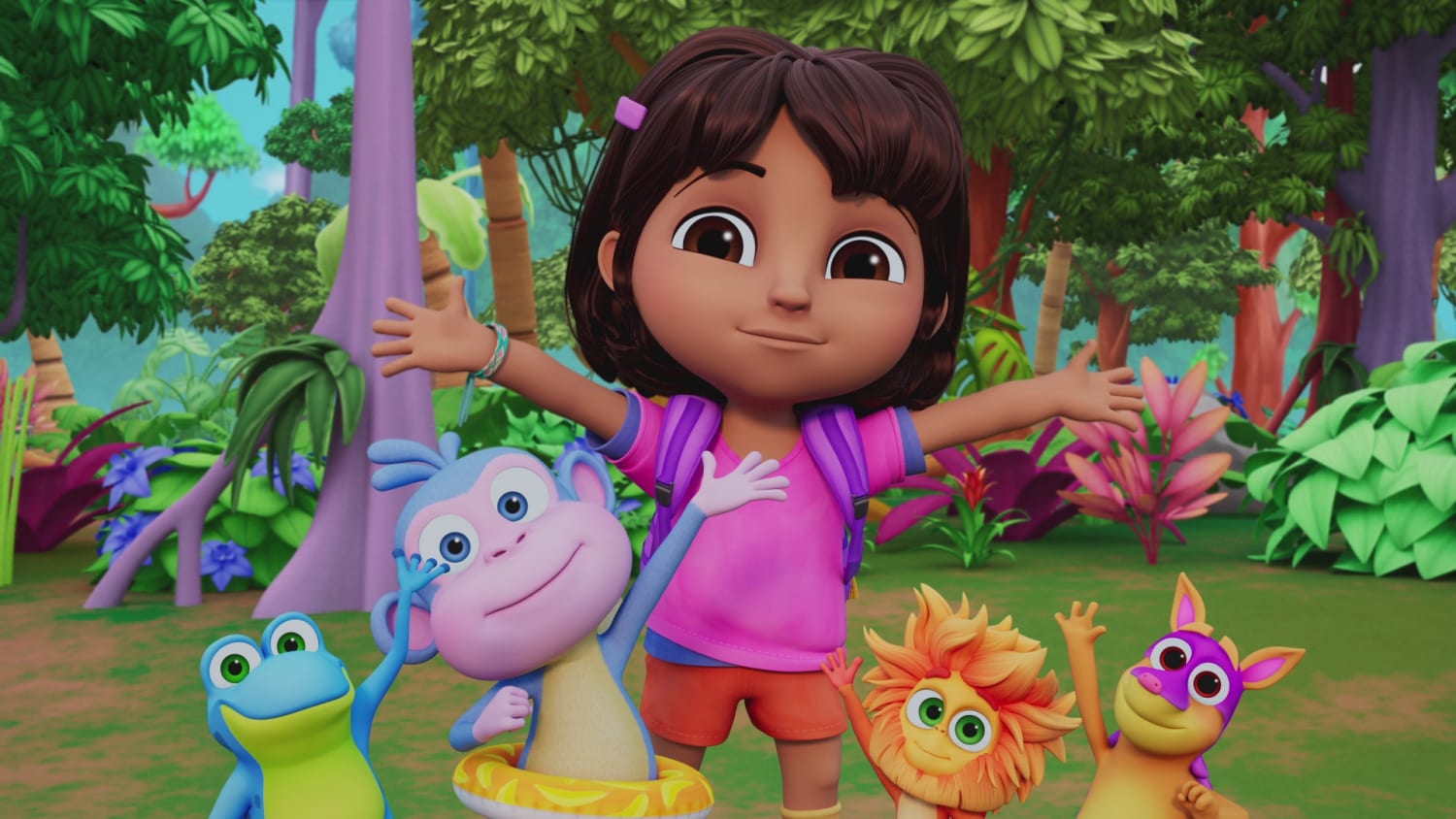
Is there more coming? Paramount+ has been leaning heavily into their library. We’ve seen the return of a CG-animated Dora series in 2024, which went back to the preschool roots. However, the "Teen Dora" universe remains a standalone success for now. There have been rumors of a sequel to the Lost City of Gold, but nothing is officially greenlit yet.
The interesting thing is how the brand has split. You have "Toddler Dora" for the new generation of kids and "Teen Dora" as a nostalgic touchstone for the people who grew up with the 2000s original. It’s a smart way to keep a brand alive for over 20 years.
Comparing the Versions
| Feature | Original Cartoon | Live-Action Movie |
|---|---|---|
| Dora's Age | 7 years old | 16 years old |
| The Map | Actually sings and talks | A physical map (mostly) |
| Swiper | A bipedal fox | A CGI fox voiced by Benicio del Toro |
| Tone | Educational/Interactive | Satirical/Action-Adventure |
| Diego | Action hero kid | Skeptical, embarrassed cousin |
What You Should Take Away From Teen Dora
If you’re a filmmaker, a content creator, or just a fan, there’s a lesson in how this character was handled. You don't have to "fix" a character to make them work for an older audience. You just have to place them in a context where their traits are challenged.
Dora's "niceness" is a challenge in a cynical high school. Her "preparedness" is a challenge when she's actually in life-or-death situations. By keeping the essence of the character intact, the creators made Dora the Explorer as a teenager feel authentic rather than a corporate cash grab.
Basically, it worked because they didn't try to make Dora "cool." They leaned into her being a dork. And in 2026, being a dork who knows exactly who they are is probably the coolest thing you can be.
Actionable Steps for Exploring the Lore
- Watch the 2019 Movie: If you haven't seen Dora and the Lost City of Gold, it's available on most streaming platforms like Paramount+ or Amazon Prime. It’s worth it for Michael Peña’s "rave music" monologue alone.
- Check out the 2024 Reboot: Compare the new CG-animated Dora to the original. Notice how the pacing has changed to accommodate shorter modern attention spans.
- Follow Isabela Merced: The actress has moved on to major roles in Alien: Romulus and Superman. Seeing her career trajectory shows how significant the Dora role was as a launching pad.
- Ignore the Fan-Made "Gritty" Trailers: There are several viral "dark" Dora trailers on YouTube (like the one from CollegeHumor). They are funny, but they aren't official. Don't confuse them with the actual studio-backed live-action version.
The legacy of Dora is surprisingly resilient. She’s survived the jump from 2D to 3D and from preschool to puberty. Whether she’s asking you to say "¡Abre!" or outrunning treasure hunters in the Peruvian jungle, she remains one of the most consistent characters in kids' media history.